Defining Digital Marketing: A Complete Guide for 2026
written by Amarjeet Singh//Published Date: 03/03/2026
Introduction
Digital marketing is often misunderstood as just social media posting or running online ads. In reality, it is a structured and data-driven system that helps businesses connect with audiences through digital platforms.
As we move into 2026, the landscape is being reshaped by AI, automation, and measurable strategies. For students, understanding and correctly defining digital marketing is essential to building a future-ready career.
This guide explains what digital marketing truly means, its major components, digital marketing trends 2026, and how students can prepare for the future of digital marketing.
What Is Digital Marketing?
Defining digital marketing simply:
Digital marketing is the promotion of products, services, or brands using digital channels such as search engines, social media, websites, email, and paid advertising platforms.
Unlike traditional marketing, digital marketing allows:
Real-time performance tracking
Audience-specific targeting
Data-driven marketing techniques
Clear return on investment measurement
In 2026, every business — from startups to multinational companies — depends on digital marketing to survive and grow.
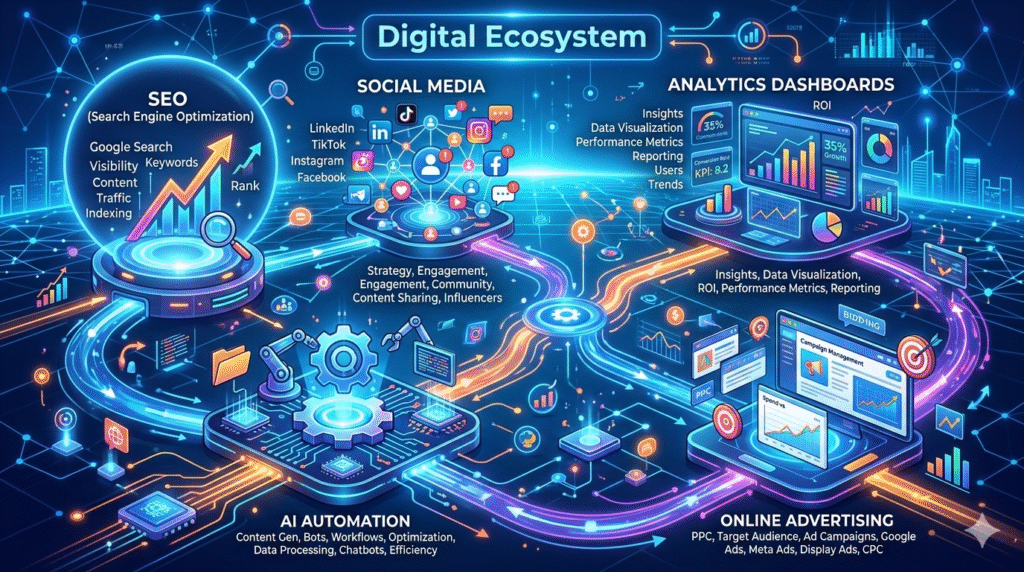
Core Components of Digital Marketing
To understand digital marketing completely, students must know its main pillars.
1. Search Engine Optimization (SEO)
SEO helps websites rank higher on search engines like Google.
SEO includes:
Keyword research
On-page optimization
Technical improvements
Link building
Search intent analysis
In 2026, SEO is focused more on helpful, experience-based content rather than keyword stuffing. AI systems now evaluate content quality and user behavior before ranking pages.
2. Social Media Marketing
Social media platforms such as Instagram, YouTube, and LinkedIn play a major role in digital marketing strategies.
This area focuses on:
Brand awareness
Engagement
Community building
Short-form video content
Short videos, educational reels, and informative posts dominate digital marketing trends 2026. Students building a professional presence on platforms like LinkedIn can also improve their career visibility.
3. Performance Marketing & Paid Advertising
Performance marketing is results-based advertising. Platforms such as Google Ads allow marketers to run targeted campaigns and pay only when users take specific actions.
This includes:
Pay-per-click (PPC) ads
Display ads
Retargeting
Conversion tracking
Data-driven marketing techniques are essential here. Without proper tracking and analytics, paid campaigns waste money.
4. Content Marketing
Content marketing involves creating blogs, videos, guides, and newsletters to attract and educate audiences.
Even in 2026, content remains the foundation of digital growth. However, AI in digital marketing 2026 now assists in:
Content research
Idea generation
Personalization
Performance optimization
Despite AI support, human expertise remains critical for authenticity and trust.
AI in Digital Marketing 2026
Artificial Intelligence is transforming the future of digital marketing.
AI tools are used for:
Chatbots and automated support
Predictive analytics
Smart audience targeting
Email personalization
Automated reporting
For students, understanding AI is no longer optional. Knowing how automation works, how algorithms rank content, and how machine learning improves ad delivery is essential for career growth.
AI enhances efficiency — it does not eliminate the need for skilled marketers.
Digital Marketing Trends 2026
To fully define digital marketing today, we must examine current trends shaping the industry.
Personalization at Scale
Users expect content tailored to their preferences. Brands use data to deliver personalized emails, ads, and recommendations.
First-Party Data Focus
With privacy regulations increasing, companies now collect their own audience data through newsletters, communities, and registrations.
Short-Form Video Dominance
Educational and informative short videos generate higher engagement than static posts.
Analytics-Driven Decisions
Marketing decisions are now based on dashboards and reports rather than assumptions.
These online marketing strategies for 2026 emphasize precision, performance, and personalization.
Scope of Digital Marketing for Students
The future of digital marketing offers strong career opportunities. Some major roles include:
SEO Executive
Social Media Manager
Performance Marketer
Content Strategist
Marketing Analyst
Automation Specialist
The demand for digital marketing professionals is increasing across industries including education, healthcare, e-commerce, finance, and startups.
Students who build real-world skills gain a competitive advantage in this field.
Skills Required in 2026
To succeed in the Digital Marketing Guide era, students should focus on developing:
Analytical thinking
Understanding of data-driven marketing techniques
AI tool familiarity
Communication skills
Content strategy knowledge
Basic design and editing skills
Practical exposure through live projects, internships, and structured learning makes a significant difference in employability.
Why Structured Learning Matters
Digital marketing is skill-based rather than degree-based.
Students who actively develop practical knowledge and industry-relevant skills are more prepared for real job roles. Access to structured educational guidance, scholarship opportunities, and career-focused learning platforms can support students in building a strong professional foundation.
Conclusion
Defining digital marketing in 2026 means recognizing it as an AI-powered, data-driven system that connects businesses with the right audience at the right time.
Students who understand digital marketing trends 2026 and build practical skills will stay competitive in the evolving landscape. For structured educational support and career-focused opportunities, students can explore resources available at vidya sarthi to strengthen their journey in the future of digital marketing.
Final Thoughts
Digital marketing continues to evolve, but the core principle remains the same: deliver value to the right audience using the right strategy.
For students, this field offers long-term potential, flexibility, and growth. The key is continuous learning, skill development, and adapting to technology-driven changes.
The future of digital marketing belongs to those who are prepared to learn and apply.
Frequently Asked Questions (FAQ)
1. What does defining digital marketing mean?
It means understanding digital marketing as a strategic system that promotes brands through digital channels using data, AI, and measurable techniques.
2. What are the key digital marketing trends 2026?
Major trends include AI integration, personalization at scale, first-party data collection, short-form video dominance, and analytics-driven decision-making.
3. Is digital marketing a good career choice for students in 2026?
Yes. Digital marketing offers multiple career paths, growing industry demand, and skill-based growth opportunities across sectors.
4. How important is AI in digital marketing 2026?
AI plays a crucial role in automation, predictive analytics, content optimization, and ad targeting, making it essential knowledge for future marketers.